- Comparisons
- tBTC & nBTC: Technical
tBTC Main Components Diagram
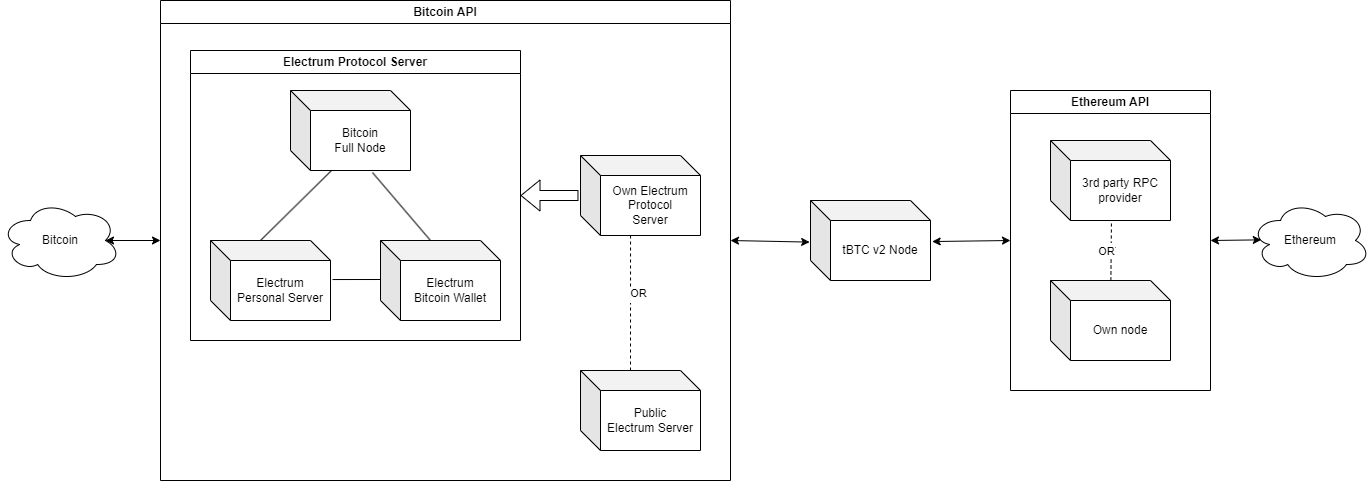
- tBTC node
-
Access to the Ethereum API
- By running their own ETH node
- OR using 3rd-party RPC provider
-
Access to the Bitcoin API - tBTC requires using Electrum protocol for BTC communication
- By running their own Electrum Personal Server (includes full BTC node)
- OR using public Electrum Server
iBTC Main Components Diagram
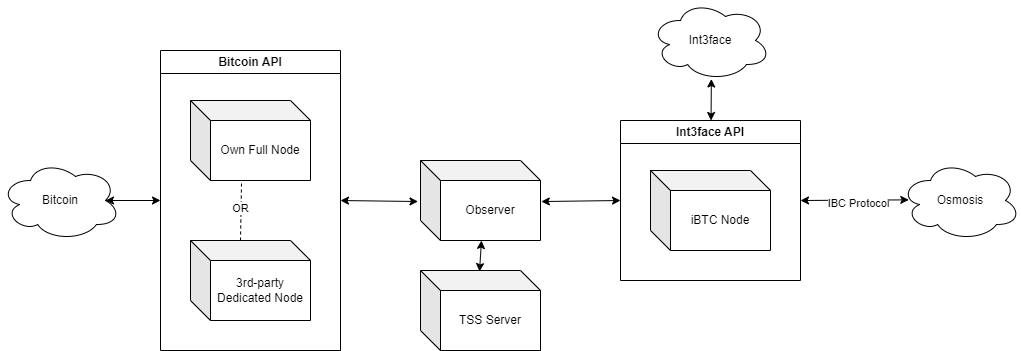
- iBTC node
- Observer node
-
Access to the Int3face API
- By running their own INT3 node
-
Access to the Bitcoin API
- By running their own node
- OR using 3rd-party dedicated node
tBTC Hardware Recommendations
Recommended hardware to run a singe tBTC v2 node: 2 vCPU / 2 GB RAM / 1 GiB Persistent StorageiBTC Hardware Recommendations
Estimated recommended hardware to run a single iBTC node: 8 vCPU / 64 GB RAM / 1+ TB Persistent StoragetBTC signing timeline
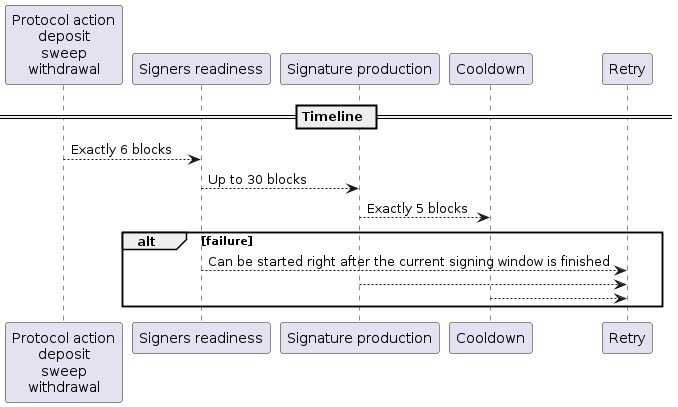
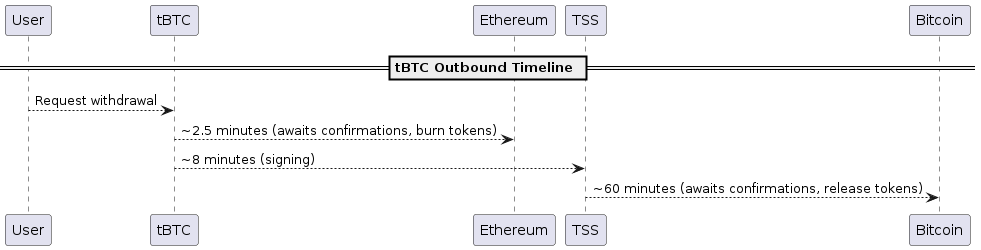
- Signers announce readiness - ~1.2 minutes (6 ETH blocks)
- Signature production - <= 6 minutes (<= 30 ETH blocks)
- Cooldown - ~1 minute (5 ETH blocks)
iBTC signing timeline
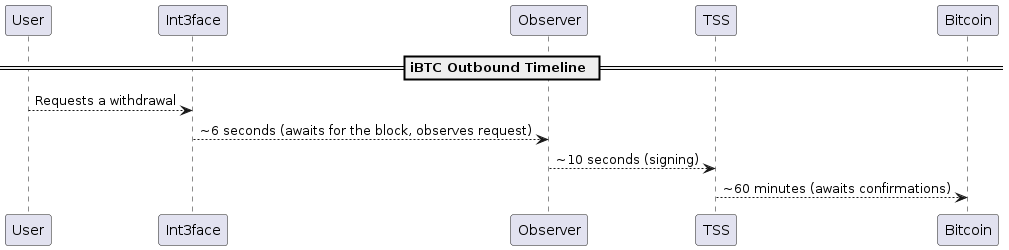
According to the Thorchain’s benchmarks TSS signature production for 10 nodes takes around 10 seconds. In case of signature failure - next attempt will be performed ASAP. We have a total timeout of 5 minutes for signing.tBTC complete timeline
Inbound transfer
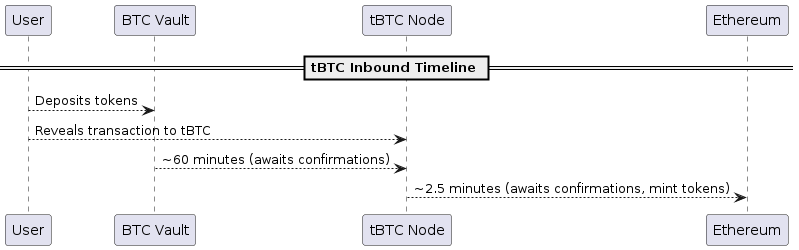
Outbound transfer
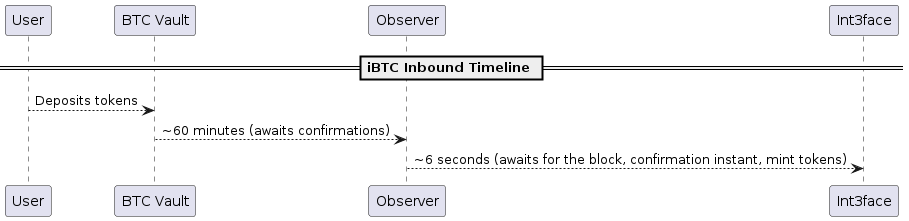
iBTC complete timeline
Inbound transfer
Outbound transfer